&geometry(261x80) "Monier Veterinary Clinic")
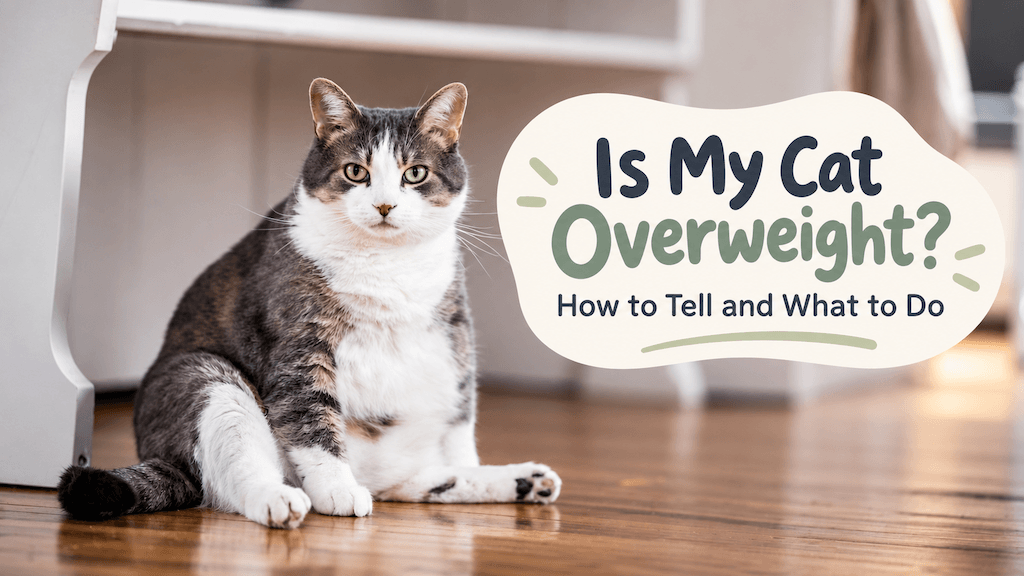
Is My Cat Overweight? How to Tell and What to Do
 "Is My Cat Overweight? How to Tell and What to Do")
A little extra padding can make a cat look cuddly, but carrying excess weight is not simply a cosmetic issue. It can affect how comfortably your cat moves, plays, grooms, and goes about everyday life. It can also increase their risk of several health problems.
The difficulty is that weight gain often happens gradually. When you see your cat every day, a few extra grams here and there can be surprisingly hard to notice. Long fur, a naturally stocky build, and the loose skin beneath the abdomen can make it even harder to judge.
So, how can you tell whether your cat is a healthy weight, slightly overweight or carrying enough extra weight to affect their health?
How common is excess weight in Australian cats?
Australian figures commonly cited by the pet industry suggest that around one in three cats is overweight or obese.
Around 1 in 3 cats
is overweight or obese
This means many owners may not recognise that their cat is carrying excess weight, particularly when heavier cats have become increasingly common. Comparing your cat with other cats is not necessarily a reliable guide. Their individual body shape and condition are much more important.
The good news?
Gradual, carefully managed weight loss can improve a cat’s mobility, comfort and general wellbeing. The first step is recognising that there may be a problem.
There is no single ideal weight for every cat
You may have heard that an adult cat should weigh around 4 kilograms, but healthy weight varies considerably between cats. Breed, sex, age and body frame all make a difference. A small-framed cat may be overweight at a weight that would be perfectly healthy for a larger cat.
The number on the scales is still useful, particularly when tracked over time, but it does not tell the whole story. Vets also assess a cat’s body shape and the amount of fat covering areas such as the ribs, spine and waist. This is known as a Body Condition Score.
Rather than comparing your cat with another cat, the more useful question is: Does my cat have an appropriate amount of body fat for their individual frame?
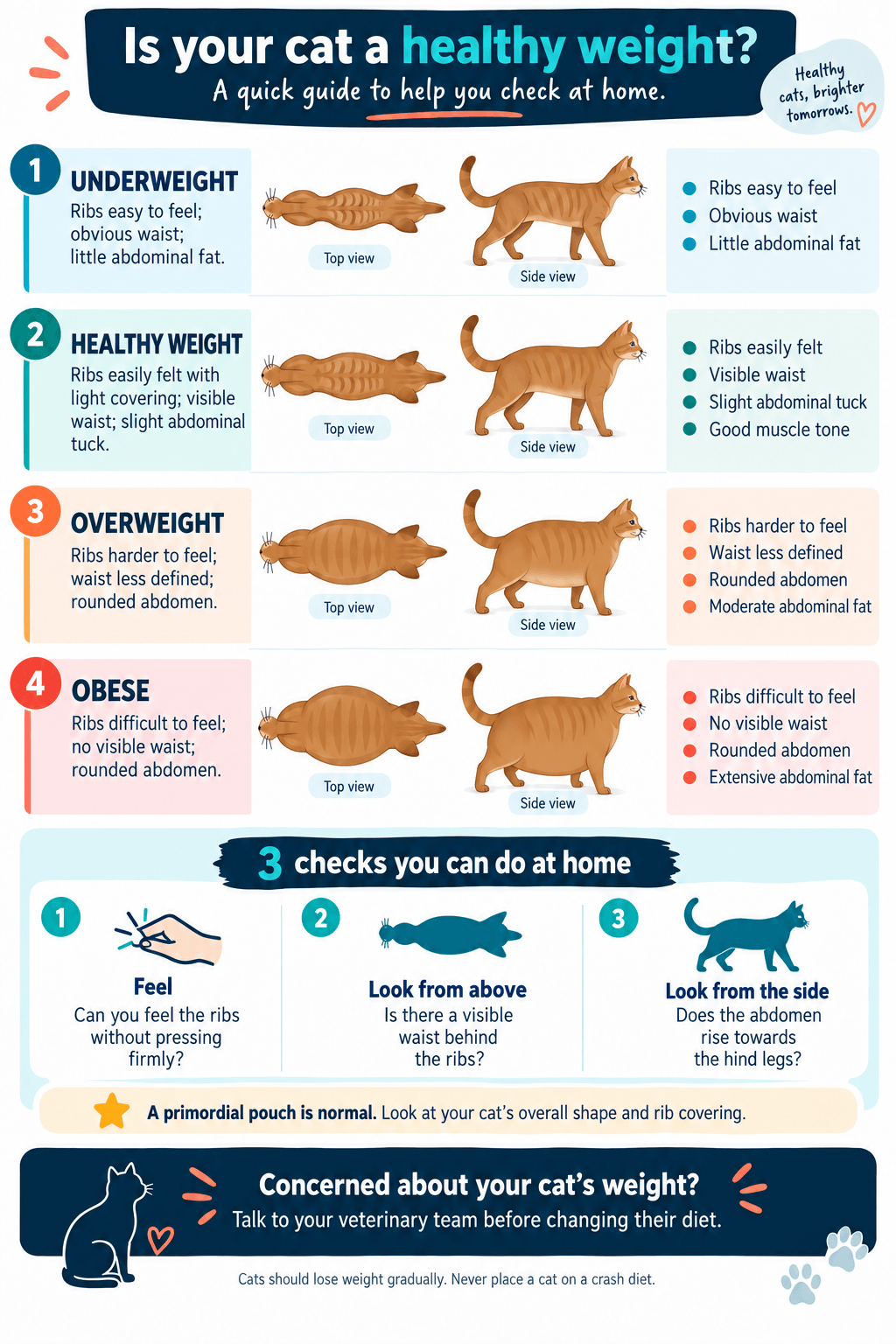
Try these three simple checks at home
Your hands may tell you more than your eyes, especially if your cat has a thick or fluffy coat.
1. Feel along the ribs
Gently run your hands over both sides of your cat’s chest.
In a cat at a healthy weight, you should be able to feel the ribs without pressing firmly, although they should not be sharply visible or protruding. There should be a light covering of tissue over them.
If you need to press through a thicker layer before you can find the ribs, your cat may be carrying excess weight. If the ribs are very prominent, your cat may be underweight.
2. Look from above
Stand above your cat while they are standing naturally.
A cat at a healthy weight should have a visible waist behind the ribs. The body should narrow slightly before widening again around the hips.
An overweight cat may have little or no waist, giving the body a more rounded or rectangular appearance. An obese cat may appear broadly rounded when viewed from above.
3. Look from the side
From the side, the abdomen of a healthy-weight cat should rise slightly towards the hind legs rather than hanging in a straight or rounded line.
What about the primordial pouch?
Do not mistake the primordial pouch for excess fat. This is the loose flap of skin and tissue that hangs beneath the abdomen and may sway when a cat walks. It is a normal part of feline anatomy and can be present even in slim cats.
The overall shape of your cat’s body and the amount of padding over the ribs are more useful indicators than the pouch alone.
Other signs your cat may be carrying extra weight
Changes in your cat’s body condition may be accompanied by changes in what they can or choose to do.
You might notice that your cat:
Hesitates before jumping onto furniture
No longer jumps as high as they once did
Uses several smaller jumps to reach a favourite spot
Spends more time sleeping and less time playing
Tires quickly during activity
Has difficulty grooming their back or hindquarters
Develops a greasy, flaky or matted coat
Appears uncomfortable when climbing stairs
Has a collar or harness that has gradually become tighter
These changes are not always caused by weight.
Pain, arthritis and other health conditions can also reduce a cat’s mobility or ability to groom.
Noticed a change in your cat?
If you have noticed changes in your cat’s movement, behaviour or grooming, arrange an examination at Monier Vet Clinic. The veterinary team can assess whether weight, pain or another health concern may be contributing.
Why does being overweight matter?
Excess body fat is not harmless. It places additional strain on the joints and can make movement more difficult, creating an unfortunate cycle: moving becomes uncomfortable, so the cat becomes less active and gains more weight.
Being overweight or obese can also increase a cat’s risk of health problems including:
Health problems associated with excess weight can include:
Diabetes mellitus
Arthritis and reduced mobility
Urinary tract problems
Difficulty grooming
Breathing and cardiovascular problems
Complications during anaesthesia and surgery
Reduced quality of life
Even a small weight gain can make a difference
For a 4-kilogram cat, gaining just 400 grams represents a 10 per cent increase in body weight. That would be comparable to a 70-kilogram person gaining 7 kilograms.
The aim is not to make every cat extremely lean. It is to help your cat reach and maintain a weight that supports comfortable movement, normal feline behaviour and better long-term health.
Why do cats gain weight?
In most cases, cats gain weight when they regularly consume more energy than they use. The difference does not need to be dramatic. A small daily excess can gradually add up over months or years.
Factors that can contribute include:
Free-feeding or continually topping up the bowl
Portions that are larger than the cat requires
Treats and table food that are not included in the daily intake
Several family members feeding the same cat
Reduced activity in indoor cats
Boredom or food-seeking behaviour
Changes in energy needs after desexing
Reduced mobility due to age, pain or arthritis
Sharing a home with another pet and eating from multiple bowls
Feeding guides are only a starting point.
Food packaging can be useful, but the recommended amount is not a precise prescription for every cat. Your cat’s needs will depend on their age, size, health, activity and whether they need to gain, lose or maintain weight.
Small extras can add up.
It is remarkably easy to overestimate how much food a cat needs. A small additional handful of dry food may not look significant, but it can add considerably to a cat’s daily energy intake.
What should I do if my cat is overweight?
The safest place to start is with the team at Monier Vet Clinic. They can weigh your cat, assess their body condition score and help determine a healthy, realistic target weight.
A veterinary examination can also help identify pain, arthritis or other health conditions that may be contributing to reduced activity or changes in weight.
A weight-management plan may include:
Measuring or weighing your cat’s daily food portions
Dividing their daily allowance into several smaller meals
Replacing free-feeding with scheduled meals
Including treats as part of their total daily allowance
Choosing an appropriate calorie-controlled food
Feeding pets separately in multi-pet households
Monitoring progress with regular weigh-ins
Do not simply make a dramatic reduction in your cat’s food. Cats must lose weight gradually and should never be starved or placed on a crash diet.
Monier Veterinary Clinic stocks diets specifically designed to help cats maintain a healthy weight or lose weight, including an option suitable for cats with arthritis. Our team can help recommend the most appropriate diet for your cat’s individual needs.
Sudden or severe food restriction can contribute to a dangerous liver condition called hepatic lipidosis, particularly in overweight cats. If your cat stops eating, contact Monier Vet Clinic promptly rather than assuming they are simply being stubborn about a new diet.
Exercise does not have to feel like exercise
Cats are more likely to move when an activity taps into their natural desire to stalk, chase, climb and search.
Try several short play sessions throughout the day using a wand toy, rolling ball or toy mouse. Puzzle feeders and hiding small portions of food around the home can encourage your cat to work for their meals. Cat trees, shelves and safe elevated resting places can also add more movement to an indoor environment.
Start gradually if your cat is very overweight, older or reluctant to move. Exercise should be appropriate for their comfort and mobility, particularly if arthritis may be present.
How often should I weigh my cat?
Regular weighing makes gradual changes easier to spot. If your cat is maintaining a healthy weight, checking every few months may be enough. Cats following a weight-loss plan will usually benefit from more frequent checks.
Monier Vet Clinic can recommend an appropriate weighing schedule based on your cat’s starting weight, target weight, and overall health. Recording each result creates a useful trend and helps distinguish genuine progress from normal day-to-day variation.
Is your cat fit or a little too fluffy?
It is not always easy to judge a cat’s weight, particularly when changes have developed slowly. A proper weight assessment considers more than the number on the scales. Your cat’s body condition, muscle mass, diet, mobility and overall health all matter.
If you are concerned about your cat’s weight, book a health and weight assessment with Monier Vet Clinic. The team can help you understand your cat’s current body condition and develop a safe, realistic plan suited to their individual needs.
A few practical changes now could help your cat move more comfortably and enjoy a healthier, more active life, and help you develop a safe, realistic plan if needed.
| Tags:Pet SafetyHealth AdviceCat |